
 2. What is Your Land and Infrastructure Like?
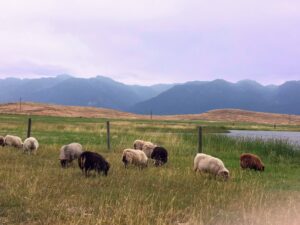
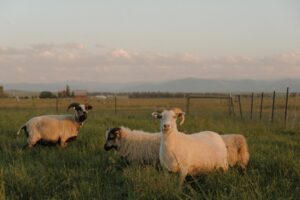
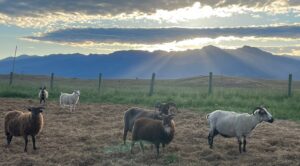
Icelandic sheep are respectful of good fencing—but only if it’s solid and well-maintained. We’ve installed woven wire around the perimeter of our property, which has worked beautifully. It keeps the sheep in and offers a strong deterrent for larger predators.
For rotational grazing, we’ve had great success using tight-knit poultry-grade electro-net fencing. When paired with a heavy-duty fence charger, this setup is both flexible and effective. It’s allowed us to move the flock easily while maintaining healthy pasture and clean ground.
Shelter is another essential—especially in the heat of summer. Icelandic sheep need a break from the sun, and even something as simple as a tarp shelter or a big shade tree can make a big difference. Our flock loves to gather under our large willow tree in the afternoon.
In winter, Icelandic’s are remarkably hardy. They often bed down right in the open field, even with snow all around them. But when it comes to rain, they have their limits. They’ll keep grazing through a light shower, thanks to their double-layered, water-repellent fleece—but a downpour will send them trotting to shelter. My sheep don’t mind a bit of mist, but they definitely don’t enjoy getting soaked!
During lambing season, a proper shelter is non-negotiable. You’ll want a space that is dry, draft-free, and protected from the elements to give those newborns the best possible start.
Checklist:
Perimeter fencing (woven wire recommended)
Rotational fencing (electro-net with charger)
Summer shade (trees, tarps, open barns)
Winter shelter (lean-to or loafing shed)
Lambing shelter (dry, clean, draft-free)
 Wool 101: The Unique Beauty of Icelandic Fleece
Icelandic sheep grow a double-layered fleece made up of two distinct fibers:
-
Thel – The fine, soft undercoat that provides insulation. It’s downy and delicate, perfect for garments worn close to the skin.
-
Tog – The long, coarse outer coat that’s strong, water-resistant, and durable. Ideal for outerwear like hats, sweaters, scarves, gloves, and socks.
Together, these fibers offer warmth, breathability, and natural weather protection—just one of the reasons Icelandic wool is beloved by fiber artists around the world.
A few more wool facts:
-
An adult Icelandic sheep produces 4–7 pounds of fleece per year.
-
Wool comes in a stunning array of natural colors—from creamy white and silvery grey to deep chocolate, warm latte, charcoal, and true black.
Whether you’re raising Icelandic’s for spinning, felting, or selling fiber, their fleece is truly a gift of the land—and a joy to work with
 3. How Many Sheep Should I Start With?
This is one of the biggest questions for any new shepherd—and there’s no one-size-fits-all answer. But there are a few guiding truths to help you decide.
First, sheep are herd animals. They need companionship to feel safe and content. At a minimum, you’ll want to start with two sheep, but three or more is ideal. Icelandics are especially communal. I often look out into our flock and see the same pairs or little groups grazing together day after day. They form bonds and friendships—you’ll notice who sticks together and who prefers their own rhythm.
For first-time shepherds, I always recommend including at least one proven ewe in a starter flock. This is a ewe who has successfully lambed before and has earned her place as a steady presence. These experienced ewes are more than just good mothers—they are quiet teachers. They help the whole flock settle in and often guide new shepherds in ways that books simply can’t. I’ve learned so much just by watching my livestock.
Raising Icelandic sheep requires time, effort, and resources—but it also offers deep joy.
Being observant and willing to learn from the flock makes the journey not only manageable, but meaningful.
Depending on your goals, a starter flock may include ewe lambs, ram lambs, or a mix of young stock and mature animals. The right combination depends on your experience level, pasture size, and how quickly you want to move into breeding or fiber production.
My heart’s desire is to help you start strong—to guide you toward a flock that brings both purpose and joy, even through the steep learning curve that comes with livestock. The best beginning is one that fits you and sets you up to love this way of life.
 5. Do You Understand Their Unique Traits?
Icelandic sheep are not just beautiful—they’re uniquely adapted, resilient, and full of character. But to raise them well, it’s important to understand what makes them different from more common commercial breeds.
They are seasonal breeders, meaning ewes come into heat as daylight shortens. Most breedings occur between October and January, and lambing follows naturally in the spring (March through May). This rhythm is built into the breed and allows lambs to arrive when grass is growing and weather is improving.
Icelandics are also naturally parasite-resistant—a wonderful trait—but that doesn’t mean they’re parasite-proof. Observant pasture management, rotational grazing, and regular wellness checks are still essential.
They’re incredibly resourceful and independent. Many can lamb unassisted on pasture, and most ewes easily raise twins (sometimes even triplets!) with minimal intervention—as long as their basic needs are met.
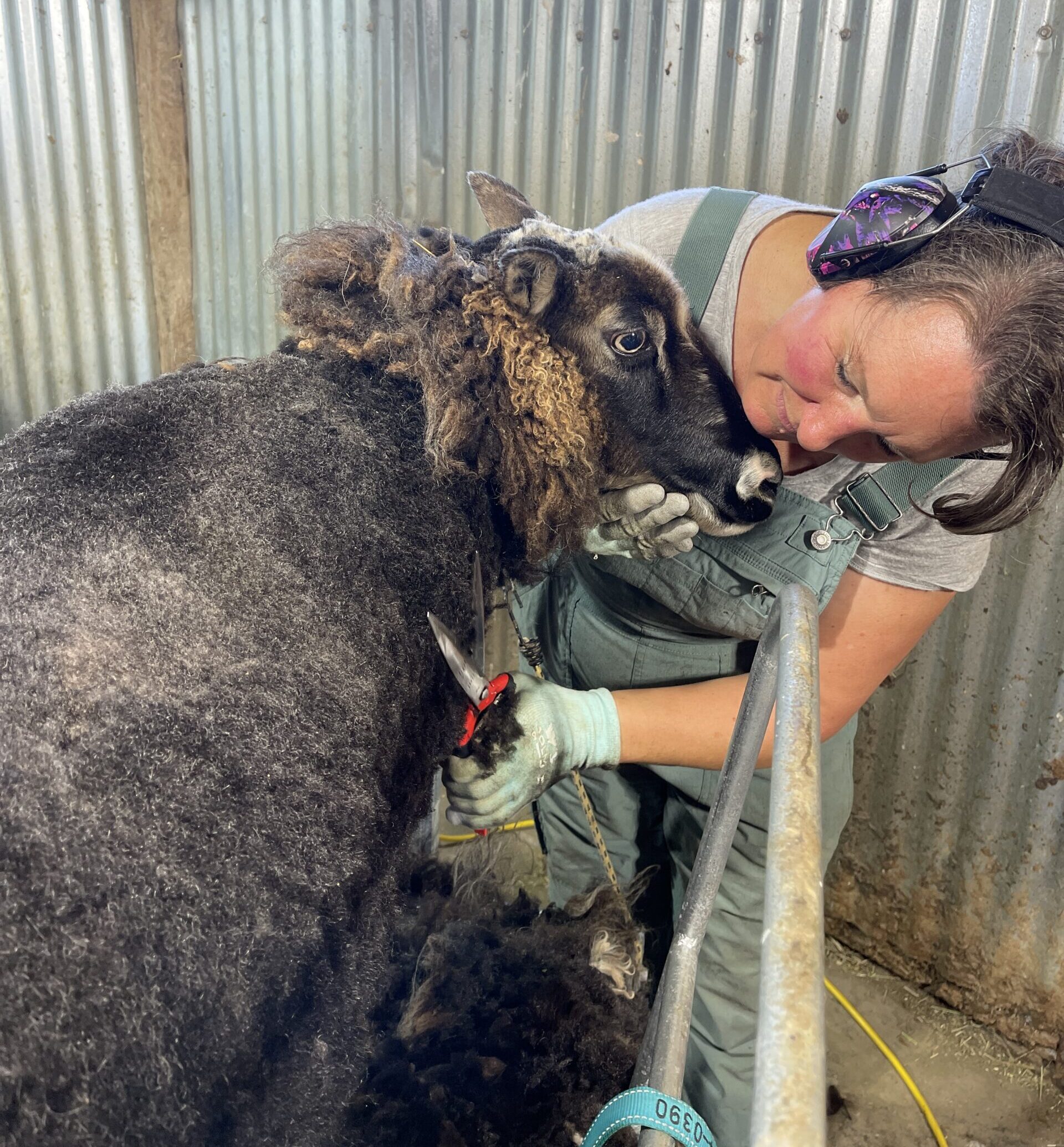
Their wool is another wonder. The dual-coated fleece, made up of a soft undercoat (thel) and a coarse outercoat (tog), is naturally water-repellent and often begins to shed on its own in late spring. But while Icelandics can start shedding, regular shearing is still essential for their health.
One of the most unique traits of the breed is the “wool rise,” which occurs in late spring to early summer. This is when the winter coat naturally begins to separate from the sheep’s body, making shearing much easier and gentler for both sheep and shepherd.
I’ll never forget my first spring with Icelandics—we were doing a routine health check, and when I reached out to catch a ewe, I ended up with a huge handful of wool while she darted away! I had no idea that Icelandics go through this natural wool sloughing process. But now, I wait for the wool rise—it’s the sheep’s way of telling me it’s time.
Tip: Waiting for the wool rise reduces stress on the sheep and results in a cleaner, neater fleece. It’s nature’s way of helping the shepherd.
Nutritionally, Icelandic’s have unique mineral needs. Unlike many breeds, they require some copper and absolutely thrive with free-choice kelp—a nod to their native Icelandic diet. Kelp provides essential trace minerals that support immunity, fertility, and fleece quality.
-
Breeding Cycle – Fall breeding, spring lambs
-
Wool Care – Dual-coated fleece with natural shedding tendencies
-
Nutrition – Free-choice minerals, including copper and kelp
-
Lambing – Known for easy births and strong maternal instincts
-
Parasite Management – Naturally resilient, but pasture rotation is key
Icelandic’s are low-input animals when their unique needs are understood and honored. The more you learn their rhythms, the more you’ll see how beautifully they can fit into a regenerative, holistic farm system.
 6. Will You Breed Right Away—or Wait?
This is one of the first—and most important—questions to ask when planning your flock. Your answer will determine whether you need to bring in a ram your first year or if it’s better to wait and focus on learning the rhythm of your animals and your land.
It’s easy to be drawn to the idea of lambs bouncing around your pastures—and it truly is a joyful season! But lambing comes with real responsibility and risk, and there’s no shame in starting slowly. Taking a “dry” first year can give you time to observe, build routines, understand your sheep, and get fully comfortable before adding in the excitement and challenge of lambing.
Ask Yourself:
-
Am I prepared for the responsibility and unpredictability of lambing?
-
Do I feel confident recognizing early signs of labor, distress, or illness?
-
Would a year of observation help me build confidence and understanding?
-
Do I have access to support—a mentor or vet—if something goes wrong
If you decide to wait on breeding, you won’t need a ram right away. This can simplify your first year and reduce stress while still allowing you to build strong relationships with your sheep and gain valuable experience.
On the other hand, if you have support, pasture, and the desire to begin breeding, a small breeding group (like one ram lamb and a few ewes) may be a good fit.
🧡 Whether you wait or start breeding right away, the key is to align with your goals and capacity. There’s no “right” answer—only what’s right for you and your season of life.