
A monthly guide to shepherding your flock
Raising Icelandic sheep is a beautiful rhythm—one shaped by the changing seasons and the needs of the flock. Each month brings its own tasks, challenges, and small joys. Here on Blooming Joy Farm, the year begins and ends with the same steady heartbeat: feed, care, observe, and nurture.
Throughout this guide, I’ve added light personal notes from our farm to help you picture the real-life moments that build a shepherd’s year.
FALL (September & October)
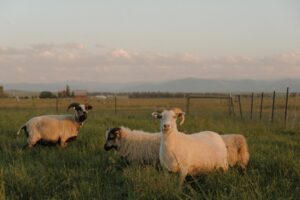
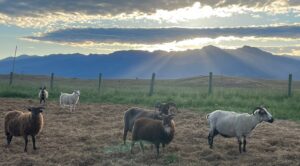
As autumn approaches and the pastures slow, the flock transitions to an all-hay diet. This is a season of resetting—gathering the flock for health checks, trimming hooves, and preparing for breeding season. I love this time of year; the crisp air and golden light make the sheep look especially woolly and content.
Every fall, I enjoy calling in the flock for their health checks. There’s something connecting about going over each ewe and ram, hands in wool, making sure they’re ready for winter and breeding.
Fall Tasks
-
Dose ewes and rams with oral Selenium/E gel (check to see if your area is selenium deficient)
-
Administer All Guard 5-in-1 trace mineral bolus (slow release, every 6 months)
-
Give a wellness tincture drench
-
Trim hooves
-
Record FAMACHA scores
-
Conduct a body-condition exam
-
If shearing twice yearly, shear now
-
Move ram lambs for processing into their own paddock (no later than Oct. 1)
-
Finalize breeding groups by mid-October
-
Provide high-quality hay, loose minerals, and kelp
Fresh Pumpkin for the Flock
Pumpkin is one of my favorite seasonal supplements. It’s rich in vitamins A and E for strong immunity and glowing wool, high in moisture and fiber for digestive support, and the seeds carry natural deworming properties. The sheep love it—and I love the health benefits it brings during the breeding and pre-winter season.


NOVEMBER
Flushing the Ewes
Flushing gives ewes a small boost of high-quality nutrition leading up to breeding to support stronger ovulation and better conception rates. I use a small dose of alfalfa pellets—just enough protein to prepare their bodies without overdoing it.
Processing Month
We process our ram lambs at around seven months, averaging 50–55 lbs hanging weight.
DECEMBER
This is a slower, quieter time. Breeding groups are together, and my focus shifts to nutrition, observation, and enjoying the calm before the new year.
Winter is also perfect for wool work—cleaning and evaluating fleeces, planning fiber projects, and researching mills or equipment.
WINTER OVERVIEW (DECEMBER–FEBRUARY)
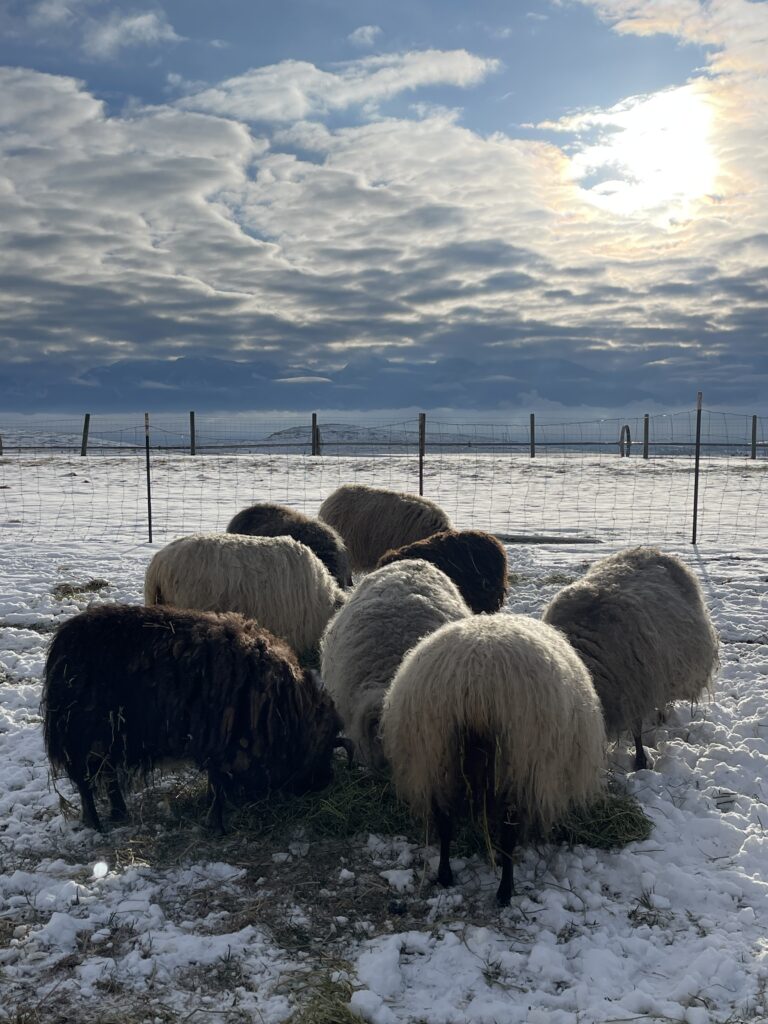
Winter is peaceful but purposeful. The flock stays cozy on deep straw with a steady supply of hay while I keep close watch on nutrition and weather-related needs.
Some of my favorite winter evenings are spent sitting quietly in the barn while the ewes chew hay. It’s warm, earthy, and peaceful—a reminder that even the coldest seasons have simple joy.
Winter Checklist
Keep the flock warm, fed, and stress-free while preparing slowly for lambing season.
Tasks:
-
Maintain clean, dry bedding
-
Ensure constant access to unfrozen water
-
Check body condition regularly
-
Deepen mineral and kelp availability
-
Clean fleeces and plan wool projects
-
Perform a full health check in January (Selenium/E, hooves, body condition)
-
Consolidate the flock into winter paddocks for easy care.
FEBRUARY
This is lambing-prep month. I go through my supplies, restock everything, and ensure my lambing bin is well organized.

MARCH
March is lambing-kit month. Being prepared makes all the difference, especially during nighttime barn checks.
The Lambing Kit Includes:
I keep my lambing supplies in a labeled plastic box with a secure-fitting lid. Here’s what I include:
- Gentle Iodine Solution – For dipping navels to prevent infection.
- Sharp Scissors – For trimming the umbilical cord if needed.
- Exam Gloves & Latex Gloves – I wear long exam gloves up to my armpits and layer latex gloves over them for better grip and sensitivity.
- OB Lube – Applied to gloves for ease when performing a check.
- Hanging Scale – To record birth weights.
- Nutri-Drench – A quick energy boost for both ewe and lamb after labor.
- Clean Towels – For drying off lambs.
- Nasal Aspirator (Bulb Syringe) – Helps clear mucus from a lamb’s airways.
- Lambing Chart – Essential for tracking dates, sire and dam info, birth type (single, twins, triplets), and lamb sexes.
- Colostrum Oral Gel – Provides early immunity support if needed.
- Jump-Start Plus – An oral microbial gel for extra support in weaker lambs.
- Wool Jackets for Cold Lambs – I make these from the sleeves of old wool sweaters.
- Heat Lamp – Used only if temperatures are dangerously low.
- Hands free head lamp
- Thermometer
- A small travel coffee cup or glass jar to collect colostrum from the ewe for a weak lamb.
- Selenium/E gel I give a dose to the momma and a little bit to the lambs.
Lambing Area Setup
A clean, comfortable space for lambing ensures a smoother process. Our barn is prepped with:
- Fresh Straw in Each Lambing Jug – Provides a clean, warm space.
- Clean Water Buckets & Hay Bins – Ensures the ewe has immediate access to food and hydration.
- Small Lambing Jugs (Pens) – We use these for 24 hours or less after birth to ensure bonding and proper nursing. We have constructed our lambing jugs using cattle panels and pallets, creating a design that works really well. Each jug measures roughly 10’x10’—large enough for the ewe to move around without stepping on her lambs but small enough to keep the lambs close. The cattle panels also provide a great place to clip water buckets up and off the ground, preventing lambs from accidentally dunking themselves. Our jugs are designed to be easily moved or taken down, secured with t-posts or 2×4 boards screwed into the barn walls. It’s important that lambing jugs are sturdy and safe for both the ewe and her lambs.
- Warm Water with Molasses for Ewes – A great energy and mineral boost post-labor.
Shearing
Shear early in the month for cleaner lambing, or shear later (mid–late May) If shearing later, trim around the udder and hindquarters in early March.
APRIL
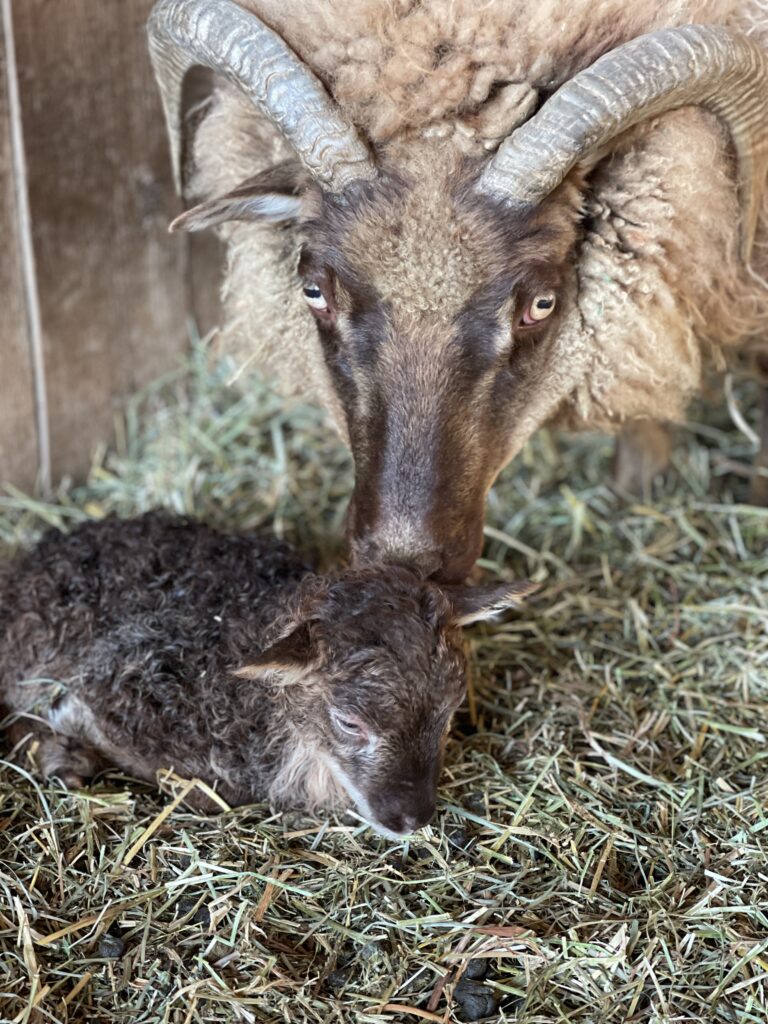
Lambing season begins! Night checks start the last week of March if due dates indicate early arrivals. Outdoor barn cameras make quick checks easy and save many late-night barn trips.

MAY
Lambing should be complete. As the spring grass emerges, watch carefully for pneumonia during warm days and cool nights.
Shear the flock (post-lambing), perform health checks, trim hooves, give the All Guard mineral bolus, and ear-tag lambs.
SPRING OVERVIEW (MARCH–MAY)
Spring is full of life; lambing, shearing, first pasture rotations, and new growth.
One of the sweetest moments each spring is watching a newborn lamb wobble to its feet for the first time. No matter how many lambing seasons I’ve lived through, it never gets old.
Shearing day always feels like a celebration. There’s nothing like rolling a fresh fleece off a ewe and seeing a year of care literally in your hands. I have had my sheep sheared and I have sheared them my self. Either way it is a rewarding day!
Spring Checklist
Seasonal Focus: Support lambing, maintain ewe health, and prepare pastures for rotation.
Tasks:
-
Set up lambing jugs and supplies
-
Assist with lambing as needed
-
Monitor ewe nutrition closely
-
Ear-tag and record lambs
-
Shear flock (either before or after lambing)
-
Begin gentle pasture rotation
JUNE
Pasture rotation may begin depending on climate. Monitor FAMACHA scores and observe lamb behavior to determine which lambs may enter the breeding program.
JULY
Perform a full-health summer check:
-
FAMACHA
-
Body condition
-
Hooves
-
Selenium/E (if needed)
Provide abundant shade and cool water—lambs often prefer shorter buckets.
AUGUST
Enjoy the beauty of your flock!
Stay vigilant about checking each sheep daily. An ounce of prevention is worth everything! All it takes is a few minutes to scan the flock to make sure each sheep is doing well or not….
SUMMER OVERVIEW (JUNE–AUGUST)
Summer is a time of abundance: rich pasture, active lambs, and parasite management.
Summer Checklist
Seasonal Focus: Manage parasites, protect from heat, and maintain pasture health.
Tasks:
-
Rotate pastures routinely
-
Provide shade and fresh water
-
Perform FAMACHA checks often
-
Watch for heat stress
- Enjoy your beautiful sheep grazing in the pastures!