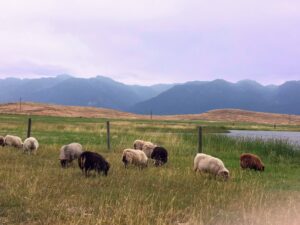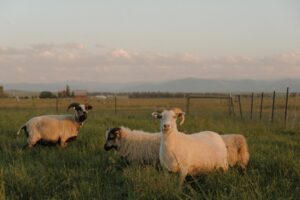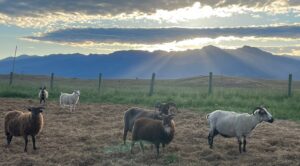
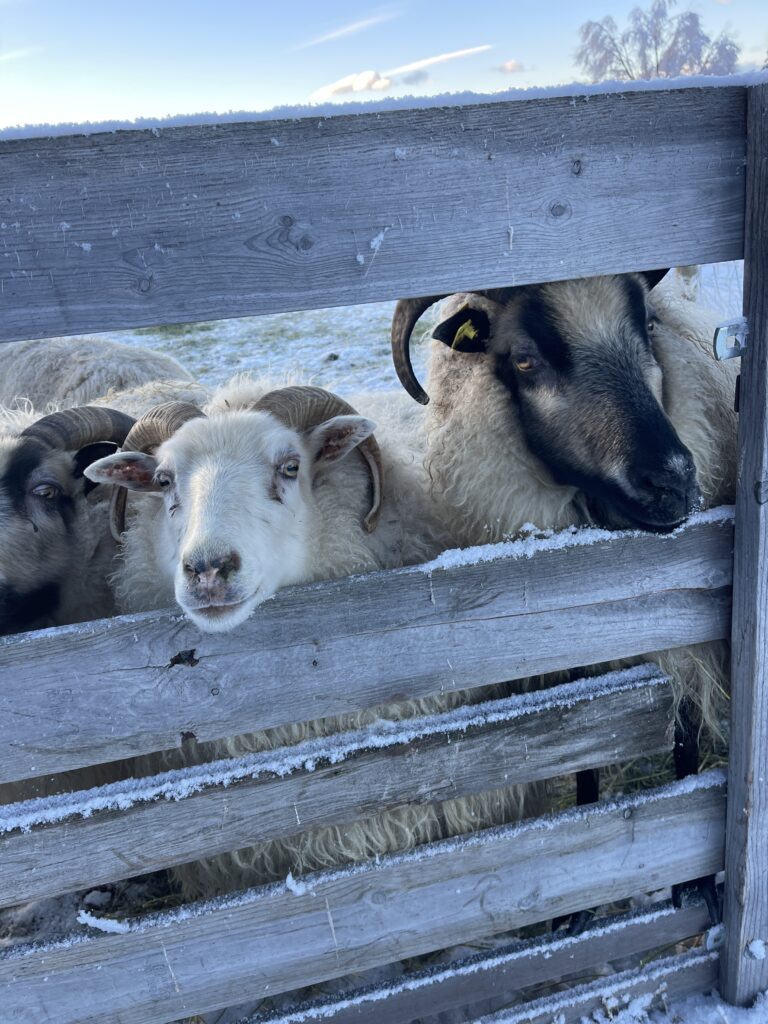
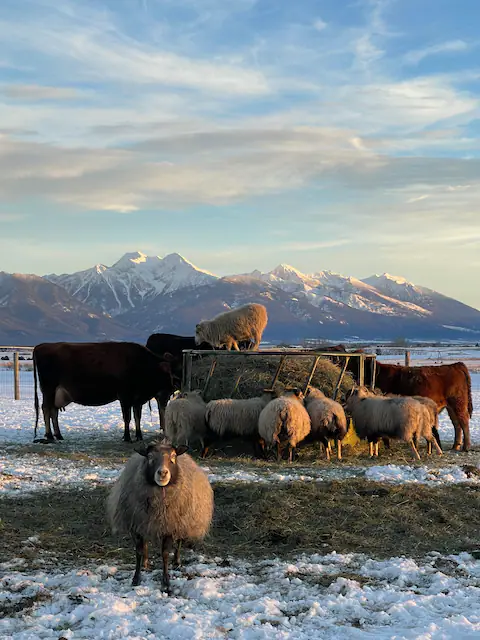
As the days grow shorter and the air carries that unmistakable chill of winter, life on the farm begins to shift. The garden is at rest, and the pace slows just enough for us shepherds to turn our attention to the flock, —ensuring that our ewes are well-fed, content, and ready to bring healthy, robust lambs into the world come spring.
Feeding for Health and Strength
Good nutrition during the winter months is vital, especially for pregnant ewes whose energy is devoted to growing strong lambs. Here in the north, we feed a high-quality grass-alfalfa mixed hay throughout the cold season, averaging about five pounds per ewe per day. It’s important to monitor body condition—keeping the girls well-covered but not overweight.
In addition to hay, we make sure that fresh, loose minerals, salt, and kelp are always available in a covered area. These free-choice supplements are small but powerful components of winter health, supporting everything from wool quality to reproductive strength.
Building Trust and Connection
Winter tends to bring quieter moments to the barnyard—perfect for nurturing the bond between shepherd and flock. I’ve found that my ewes especially enjoy a bit of extra attention this time of year. Sitting among them, offering gentle scratches and soft words, builds trust that carries over into lambing season. These are the small, grounding joys of shepherd life.
Wool Work and Record Keeping
When the fields are blanketed in snow, I turn to one of my favorite winter projects: skirting and picking fleeces. This is the perfect time to prepare wool for processing at the mill or to sell as raw fleece. The slower rhythm of winter allows for thoughtful work—sorting, labeling, and appreciating each fleece for its unique texture and color.
I also take advantage of the season to get all my flock records up to date. I track breeding dates, health checks, and feeding notes—both on paper and in the , which has been a wonderful tool for organizing flock data. Having clear, detailed records makes spring lambing far smoother.
Preparing for Lambing
Late winter is when preparation turns into anticipation. We begin setting up lambing jugs, ensuring there are enough clean water buckets and fresh straw for bedding. We also schedule a full health check of each ewe—trimming hooves, giving Selenium & E paste, and evaluating body condition.
Remember that **Icelandic sheep have a slightly shorter gestation period—142 to 144 days—**so it’s wise to begin lamb watch around day 138. I mark these dates carefully in both my binder and my app to stay organized and ready.
Sharpening Tools and Skills
Since we shear only in the spring, I take time now to sharpen clipper blades and make sure all tools are in order. These small acts of preparation save a lot of stress when spring arrives in a flurry of activity.
A Season for Shepherds
Winter may seem like the quiet season, but for the shepherd, it’s a time rich with purpose. Caring for your flock through these colder months requires attentiveness and love. Each chore—feeding, record keeping, checking fences, or simply spending time with your sheep—builds the foundation for a healthy lambing season and a thriving flock.
Shepherding through the winter reminds me that stewardship is not just about tending animals—it’s about connection, intention, and the quiet rhythm of life lived close to the land.

Winter Flock Care Checklist
Whether you’re caring for a few sheep or managing a growing flock, having a plan in place makes winter chores more manageable and ensures your ewes stay healthy and content. Here’s a simple checklist to guide you through the season:
Nutrition & Feeding
-
Provide high-quality grass-alfalfa mixed hay (approx. 5 lbs per ewe daily)
-
Keep fresh, loose minerals and salt available at all times
-
Offer free-choice kelp for trace minerals and digestive support
-
Monitor body condition regularly—adjust feed as needed
Shelter & Comfort
-
Check barns and shelters for drafts and leaks before cold weather sets in
-
Maintain dry bedding—add fresh straw regularly
-
Ensure access to unfrozen water (heated buckets or tank de-icers can help)
Health & Maintenance
-
Trim hooves and assess body condition before deep winter
-
Administer Selenium & E paste
-
Observe flock daily for signs of illness or discomfort
-
Maintain a calm, low-stress environment
Wool & Record Keeping
-
Skirt and pick fleeces for processing or sale
-
Label and store wool in breathable bags. I use cotton pillow cases. They are easily found at second hand stores and are very inexpensive.
-
Update flock records—breeding, health, and feeding notes
-
Back up digital records (using an app like SheepDogAG)
Lambing Preparation
-
Set up lambing jugs by late winter
-
Clean and organize water buckets and feeding equipment
-
Stock up on straw for bedding
-
Begin lamb watch around 138–140 days from ram cover date
-
Sharpen shearing blades and check equipment
Connection & Care
-
Spend quiet time with your flock to build trust and familiarity
-
Enjoy the rhythm of winter—use this time to plan, rest, and prepare
Final Thoughts
Winter shepherding is more than just chores—it’s a season of quiet devotion. Each small act of care, from feeding hay to jotting notes in a record book, lays the groundwork for spring’s renewal. Take joy in these months of preparation and the peaceful company of your flock.