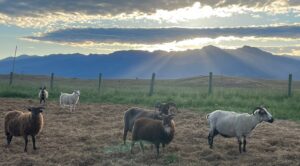
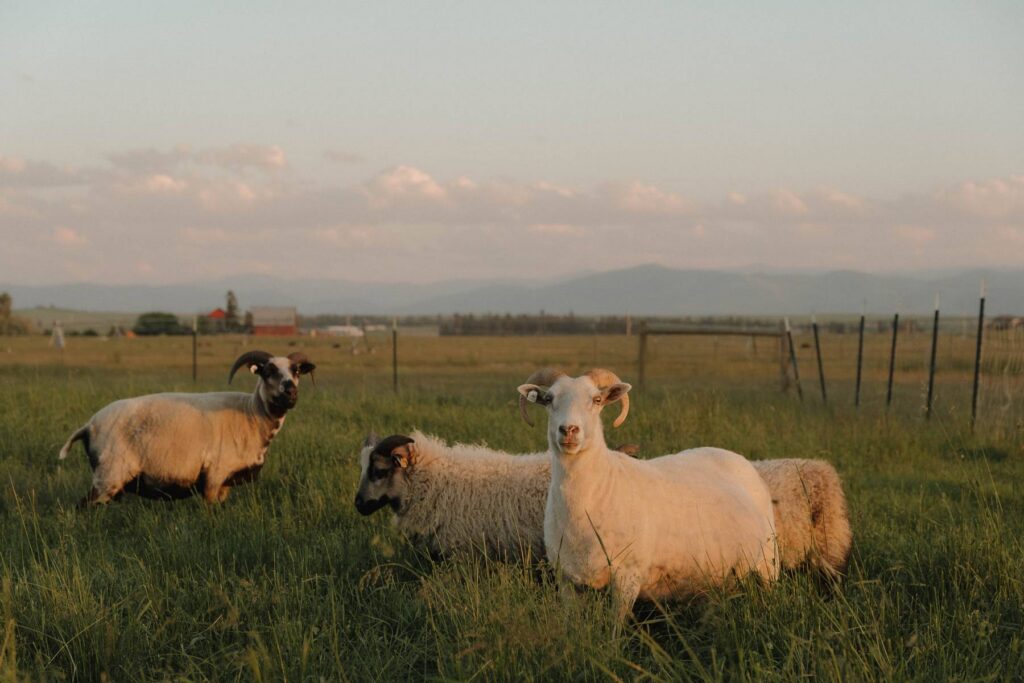
 As August gives way to September, our farm begins to settle into one of my favorite seasons of shepherding. The frantic pace of lambing and gathering the harvest from the garden and orchard has slowed, the mornings are cooler, and our attention turns toward the next generation. While breeding season may seem as simple as turning the ram out with the ewes, I’ve learned over the years that healthy spring lambs actually begin months earlier with thoughtful preparation.
My philosophy has always centered around prevention rather than reaction. A ewe with balanced nutrition, healthy mineral stores, sound feet, and a strong immune system enters breeding season prepared to do what nature designed her to do. Rather than relying on interventions later, we invest our time in building resilient animals long before the ram joins the flock.
Assess Body Condition
We start by checking each ewe’s Body Condition Score (BCS) on a 1–5 scale:
-
- 1 = Very thin
-
- 3 = Ideal
-
- 5 = Obese
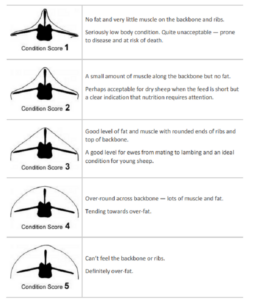
One of the most important things you can do before breeding season is evaluate the body condition of every ewe in your flock. This isn’t something that can be judged by looking alone—especially with Icelandic sheep. Their thick, dual-coated fleece can easily hide whether a ewe is carrying too much or too little condition.
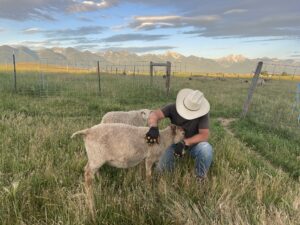
Instead, place your thumb along the ewe’s spine with your fingers resting over the loin muscles on either side. Gently feel the amount of muscle and fat covering the backbone. A ewe in ideal breeding condition should have a spine that is easy to locate but not sharp or prominent, with good muscle coverage along both sides. This hands-on assessment provides a far more accurate picture than appearance alone.
My goal is to have each ewe enter breeding season with a Body Condition Score (BCS) between 2.5 and 3.5. Ewes that are too thin may have reduced fertility, lower conception rates, or struggle to maintain pregnancy. Over-conditioned ewes can also experience breeding difficulties and are more prone to complications later in gestation. Striking a healthy balance gives both the ewe and her future lambs the best opportunity for success.
Late summer and early fall provide the perfect opportunity to make nutritional adjustments if needed. Thin ewes may benefit from access to higher-quality pasture or a small amount of supplemental alfalfa pellets, while heavier ewes often do well with continued access to quality forage and regular exercise. Making these adjustments before the ram is introduced allows the ewe’s body time to respond naturally.
I’ve found that taking a few extra minutes to put my hands on every sheep not only helps me evaluate body condition, but also gives me an opportunity to notice small changes that could otherwise go unnoticed. A slight limp, a loose tooth, an injured udder, or a change in attitude can all be early indicators that a ewe needs additional attention before the breeding season begins. These quiet moments of observation are one of the greatest tools we have as shepherds.
 Mineral Support
Minerals play a big role in fertility. Our Icelandic sheep receive:
-
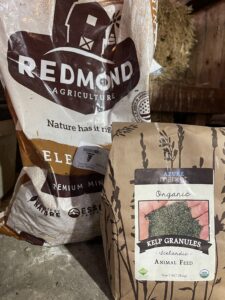
- Free-choice loose minerals formulated for sheep
-
- Kelp meal for natural iodine and micronutrients
-
- All Guard 5 IN 1 bolus is a slow release High Cobalt Multi Trace Element Bolus for Ewes & Rams that delivers all the essential Trace Elements crucial for the key phases of lambing, breeding and growth.
Support Fertility with a Balanced Mineral Program
Nutrition is about far more than good hay and pasture. Before breeding season begins, I pay close attention to each ewe’s mineral status, as balanced minerals play an essential role in fertility, conception, healthy pregnancies, and strong lambs.
Every region has its own mineral deficiencies, so it’s important to work with your veterinarian or local extension office to understand the specific needs of your area. Here in Montana, selenium is often deficient, making a consistent mineral program an important part of our flock’s overall health.
Our sheep have free-choice access to a high-quality loose mineral formulated for sheep, along with kelp throughout the year. I’ve found that consumption naturally increases during periods of greater nutritional demand, and I simply make sure these supplements are always fresh, dry, and available.
As part of our preventative health program, each ewe also receives a slow-release 5-in-1 mineral bolus every six months. This provides copper, iodine, selenium, cobalt, and zinc—trace minerals that support immune function, reproductive health, hoof integrity, wool quality, and overall vitality. In our program, this long-acting supplement has become an important tool for maintaining consistent mineral levels throughout the year.
If a ewe appears to need additional support leading into breeding season, I may also administer a Vitamin E and selenium gel. These nutrients work together to support muscle function, immune health, and reproductive performance, particularly in areas where selenium is naturally low.
I’ve learned that minerals are one of the simplest investments we can make in the long-term health of a flock. A ewe with balanced nutrition is better prepared to conceive, carry healthy lambs, produce abundant milk, and recover well after lambing. While minerals may not be the most exciting part of shepherding, they support nearly every system in the animal’s body and help lay the foundation for a successful breeding season.
Flushing
About two to three weeks before introducing the ram, I begin flushing my ewes. Flushing is the practice of providing a modest increase in nutrition leading up to and during the early part of the breeding season. This gentle boost in energy signals to the ewe that forage is plentiful and that her body is in a good position to support a pregnancy.
On our farm, we accomplish this by offering a small daily amount of alfalfa pellets. Since our flock is pasture-raised and does not receive grain, alfalfa pellets provide a simple and consistent way to increase the nutritional plane without making a dramatic change to the ewe’s diet. Alfalfa is naturally rich in protein, calcium, and other nutrients that support overall body condition and reproductive health.
Flushing is especially beneficial for ewes that are slightly below ideal body condition. While it won’t compensate for poor nutrition over the course of the year, it can improve ovulation rates and increase the likelihood of successful conception when paired with good overall flock management. Healthy ewes in moderate condition often respond well to this short-term nutritional boost.
It’s important to remember that flushing isn’t about overfeeding. The goal is to support the ewe—not to create excessive body condition. Over-conditioned ewes may experience reduced fertility and are at greater risk for lambing difficulties later in pregnancy. A gradual, balanced increase in nutrition is far more beneficial than sudden or excessive feeding.
Once the ram joins the flock, I continue offering alfalfa pellets for a short time before transitioning the ewes back to their normal forage program. By this point, they’ve entered breeding season in good body condition with the nutritional support needed for successful conception.
I’ve found that this simple practice has become another valuable piece of our fall management routine.
 Monitor Parasites with FAMACHA Scoring
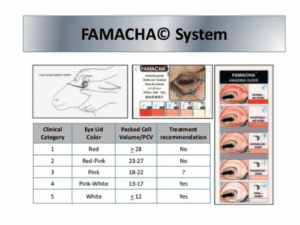
Instead of routine fecal tests, we use FAMACHA scoring to monitor for barber pole worm (Haemonchus contortus). This simple, visual check of the lower eyelid color gives a quick indication of anemia, which is often caused by parasite load.
Ewes showing pale eyelids are treated promptly, while those with healthy pink coloring are left untreated. This targeted approach helps prevent dewormer resistance and ensures our flock stays strong. Prevention is the ultimate goal!
Trim Hooves & Check Soundness
Healthy hooves mean strong movement during breeding. This is the time to:
-
- Trim overgrown hooves
-
- Look for signs of lameness, abscess, or foot rot
-
- Treat as needed with natural hoof sprays or other remedies
 Our Breeding Management Routine
Every shepherd develops a breeding system that fits the needs of their flock. Over the years, I’ve found a routine that works well for our Icelandic sheep while allowing me to make thoughtful breeding decisions each fall.
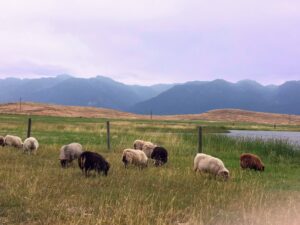
Throughout the spring and summer months, our rams remain with the ewe flock. They graze together peacefully until the end of September, when I separate the rams into their own paddock. This short period of separation gives me time to evaluate each ewe and decide on my breeding groups for the coming season.
As I make these decisions, I consider much more than convenience. I look at each ewe’s strengths, fleece characteristics, conformation, temperament, mothering ability, and genetics. My goal is to pair each ewe with the ram that I believe will complement her and continue improving the qualities we value in our flock.
Once the breeding groups are established, the rams are introduced around the first of October. I prefer to keep relatively small breeding groups, allowing each ram to focus on a manageable number of ewes while making it easier for me to track breeding dates and anticipated lambing windows.
The breeding groups remain together through January, giving every ewe ample opportunity to cycle and be bred during the natural breeding season. At the end of January, the rams are moved back into their own paddock, where they spend the remainder of the winter together.
Separating the rams after breeding also allows me to focus on the changing nutritional needs of the pregnant ewes. As gestation progresses, their care gradually shifts from preparing for breeding to supporting healthy fetal development and getting ready for lambing season. This routine has served our flock well, creating an organized breeding season and a more predictable lambing schedule each spring.
 Prepare the Ram
Healthy rams are half the equation.
-
- Quarantine new rams for 2–4 weeks
-
- Check his hooves, weight, and general health
-
- Use a marking harness or raddle to track breeding activity, if available
For lambing in late March to early May—we introduce the ram in October. Mark your calendar 142–145 days from breeding day to estimate lambing.
Breeding season is more than just turning a ram in with your flock—it’s the result of careful, intentional preparation. By tending to minerals, parasites, hooves, nutrition, and ram readiness now, you’re giving your flock the best possible start to the next generation.
Keep Detailed Breeding Records
One habit that has become invaluable on our farm is keeping detailed breeding records. While it may seem unnecessary when you have only a handful of sheep, good records quickly become one of your most useful management tools as your flock grows.
During breeding season, I keep track of each breeding group, noting which ram is paired with each ewe and the dates they are together. If I observe a ewe being bred, I’ll record that date as well. These simple notes allow me to estimate lambing dates and prepare for the busy weeks ahead.
I also keep records of each ewe’s body condition, health observations, hoof trimming, mineral supplementation, and any treatments given before breeding. Looking back over these notes from year to year helps me recognize patterns that I might otherwise miss. Some ewes consistently breed early, while others may need additional nutritional support before the breeding season. Having those records makes future management decisions much easier.
After lambing, those same breeding records become part of each ewe’s history. I record the number of lambs born, birth weights, lambing ease, mothering ability, milk production, and the health and growth of each lamb. Over time, these records provide a clear picture of which genetics are strengthening the flock and help guide future breeding decisions.
Good record keeping doesn’t need to be complicated. Whether you use a notebook, spreadsheet, or flock management app (I use SheepDogAG), the goal is simply to create a reliable history for each animal. Every breeding season adds another chapter to your flock’s story, and those notes become one of the most valuable resources you have as a shepherd.
 Continue Your Shepherding Journey
Preparing your ewes for breeding is just one part of the yearly rhythm of caring for a healthy flock. If you’d like to learn more about our holistic approach to raising Icelandic sheep, these articles may be helpful as you continue through the seasons:
-
The Seasons of a Shepherd – A month-by-month look at the yearly management of our Icelandic sheep flock.
-
Preparing Your Flock for Winter – Learn how we transition our sheep into the colder months with proper nutrition, shelter, and preventative care.
-
Reading the Ewe: Signs Lambing Is Near – Discover the physical and behavioral changes that help you recognize when lambing is just around the corner.
-
Summer Sheep Care Tips – Keep your flock healthy through the heat of summer with practical advice on hydration, parasite management, body condition, and pasture care.
-
Why We Chose Icelandic Sheep – Learn about the unique characteristics that make Icelandic sheep such a versatile and rewarding heritage breed.
-
Embracing the Legacy: Shepherding Icelandic Sheep in Montana – The story of our farm and the joy we’ve found in raising this remarkable breed.
Each season builds upon the last, and thoughtful preparation today lays the foundation for a healthy, productive flock tomorrow. I hope these resources encourage and equip you as you continue your own shepherding journey.
Autumn is a season of intention. The care we give now is an investment in the thriving future of our flock.