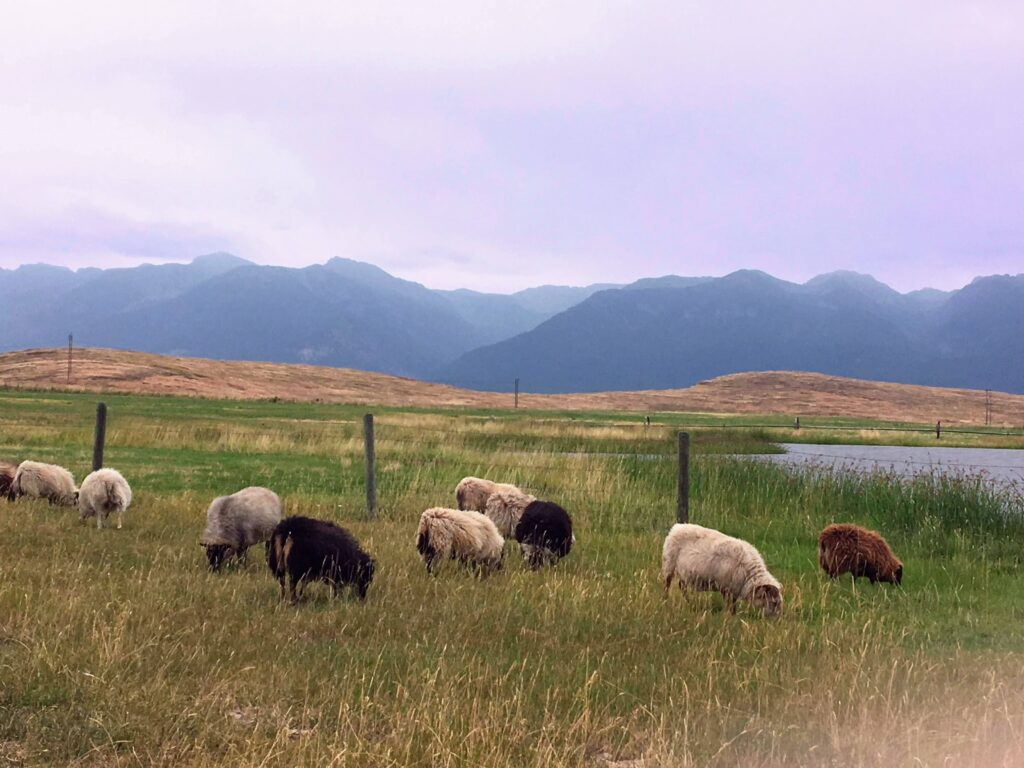
Feeding Sheep Through the Fall Transition
One of the things I have learned through years of raising sheep is that there is no single date on the calendar that tells us when pasture season is over and hay feeding should begin. Every piece of ground is uniquely different in the type, volume, and quality of forage it produces. Climate, soil, rainfall, management practices, and even the history of the land all play a part.
Our soil is heavy clay and much of the ground was historically farmed for hay and alfalfa. We don’t have readily available irrigation, so over the years we have had to learn how to work with the land we have rather than against it.
One practice that has been especially helpful is strategically choosing where we winter-feed the flock. The leftover hay, manure, and organic matter create a natural mulch over the soil. Over time, this has helped us begin building topsoil in areas that need it most.
But perhaps our greatest teacher has simply been time.
After watching our fields season after season, we have learned which sections produce the earliest spring forage, which are best saved for later grazing, and how to rotate the flock through the growing season. By fall, our grazing pattern changes again. We generally open all sections of the pasture and allow the sheep to continually graze what remains.
And this is where the transition from pasture to hay begins.
When Grass Is Still Standing—but Isn’t Enough
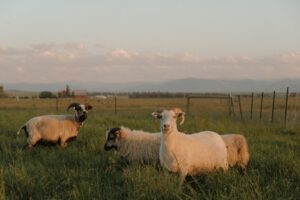
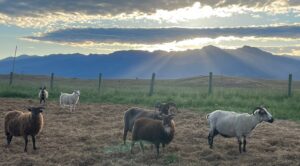
One of the more deceiving things about fall pasture is that there can still be plenty of grass standing in the field.
Our sheep may be surrounded by tall grasses, but that doesn’t necessarily mean those grasses are providing the same nutrition they offered earlier in the growing season.
As daylight shortens and temperatures cool, plant growth slows considerably. The grasses mature, and the nutritional value of the standing forage changes. This is why I don’t determine whether it is time to feed hay simply by looking at how much grass is left in the field.
For our farm, we usually begin supplementing with hay around the end of August or the first of September. The sheep continue grazing the pasture, but hay begins providing an increasingly important part of their daily forage.
It’s a gradual transition rather than an abrupt change.
Making the Transition to Dry Hay
When possible, I like to begin the fall transition with straight grass hay.
Our sheep have spent the summer eating fresh pasture, and I have found that grass hay provides a gentle transition for the rumen from fresh forage to dry forage.
This year gave us a good example of why I prefer that approach. Our hay contained quite a bit more alfalfa than usual, and we began noticing loose stools, particularly in some of our youngest lambs. Once cleaned up, the lambs were doing well, but it was a good reminder that a richer feed can sometimes be a little too much when young digestive systems are making that transition.
During these weeks when the sheep are still grazing but also receiving hay, I pay close attention to how much hay I put out compared with how much the flock actually consumes.
I don’t want to continually put out more hay simply because a feeding chart says they should be eating a certain amount. The sheep themselves give me valuable information.
Early in the transition they may still be finding quite a bit of what they need in the pasture and eat relatively little hay. As fall progresses, their hay consumption gradually increases. Watching that shift helps me determine how much supplemental forage they need to maintain good body condition as we move toward breeding season and winter.

How Much Hay Do Our Sheep Eat?
Once fresh pasture forage is no longer available, we plan on an average of approximately five pounds of hay per sheep per day.
That number isn’t absolute. The amount an individual flock requires can vary depending on the size and condition of the sheep, the quality of the hay, weather, stage of pregnancy, and the amount of hay wasted during feeding.
For our sheep and our Montana climate, however, five pounds per head per day has proven to be a useful average for planning our winter hay needs.
Through the fall and early winter, we prefer to feed primarily grass hay. As we move into the coldest part of winter, we begin introducing a grass-and-alfalfa mix. The additional alfalfa increases the protein and nutritional density of the ration at a time when our ewes are also progressing through pregnancy.
Rather than feeding the richest hay we have from the beginning of fall, I prefer to match the forage to the season and the nutritional demands of the flock.
Minerals Matter Through the Transition, Too
Hay isn’t the only thing I watch as the seasons change.
Our sheep always have access to free-choice loose sheep minerals, kelp, and baking soda. I find it fascinating to watch how their consumption of these changes throughout the year.
This fall, for example, I have noticed the flock shifting from fairly heavy kelp consumption to eating more of our loose mineral containing selenium.
I don’t try to decide for them which of these they should be consuming more heavily at a particular moment. Instead, we keep the appropriate supplements available free choice so that the flock has consistent access to them throughout the year.
Seasonal changes in pasture, hay, weather, pregnancy, and growth all influence the nutritional demands placed on the animal. Having these resources continually available is one part of our overall approach to supporting the flock.
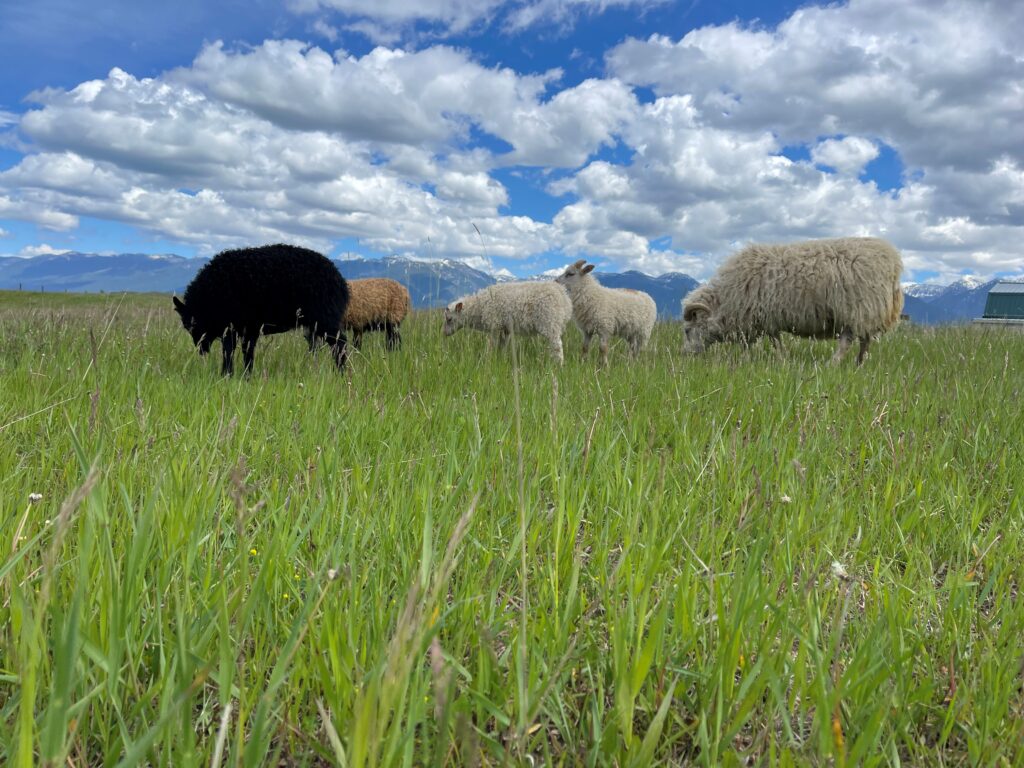
Body Condition Tells Us Whether Our Feeding Program Is Working
Every fall we perform a complete health check on the flock, and body condition scoring is an important part of that evaluation.
The pasture may look good. The hay may look good. The feeder may be empty at the end of the day. But ultimately, I want to know: How are the sheep doing?
Putting my hands on each animal gives me information that I simply can’t get by standing at the fence.
Are they maintaining good condition? Is there an individual who is thinner than the others? Do our younger sheep need something different? Are there nutritional gaps we should address before entering winter and breeding season?
This is one of the reasons prevention is such an important part of our management philosophy. I would much rather recognize a nutritional need in September or October than discover a ewe entering winter or pregnancy without the reserves she needs.
Prevention is almost always easier than trying to correct a problem later.
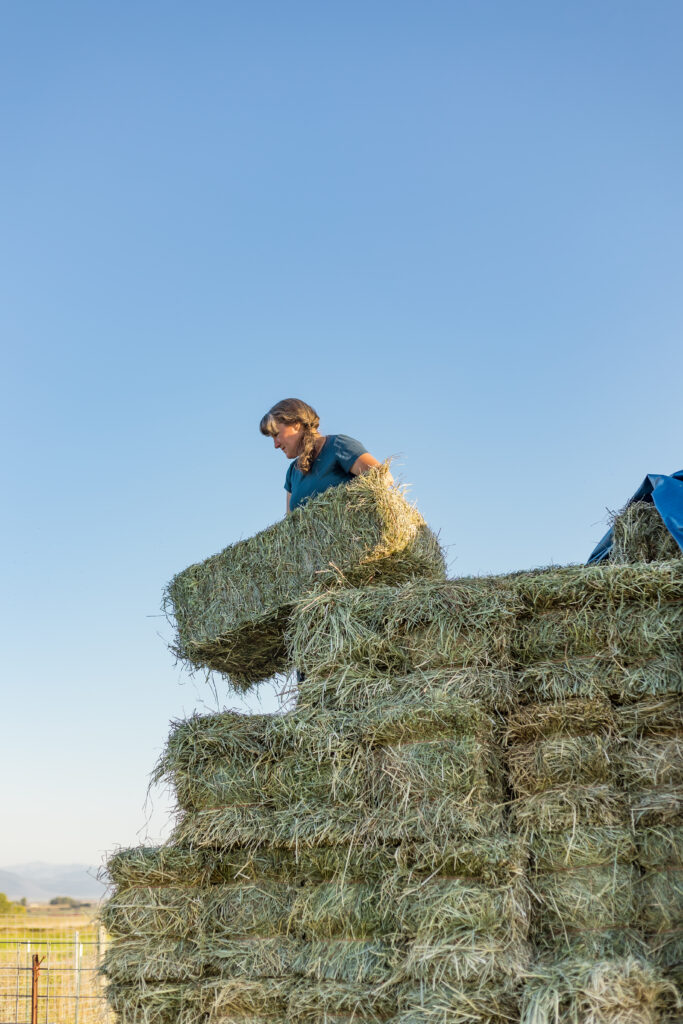
Planning the Winter Haystack
For us, hay feeding generally begins around the first of September and continues through March or April, depending upon the year.
That means planning ahead is essential.
A simple formula can give you a starting point for estimating your winter hay needs:
Number of sheep × pounds of hay per sheep per day × number of feeding days = estimated pounds of hay needed
For example, a flock of 10 sheep eating an average of 5 pounds per day for 210 feeding days would require:
10 × 5 × 210 = 10,500 pounds of hay
That’s approximately 5.25 tons of hay.
I also want a buffer in the barn. Winters don’t always follow our plans. Spring grass may arrive later than expected, temperatures may be colder, and there will inevitably be some hay waste. I would much rather enter March knowing we have extra hay than begin rationing the last of the haystack while waiting for the grass to grow.
Your own calculation may look very different from ours. Five pounds per sheep per day is what we have found useful for planning on our farm—it isn’t a prescription for every flock.
Your sheep, hay quality, climate, feeding system, pasture, and length of winter all matter.
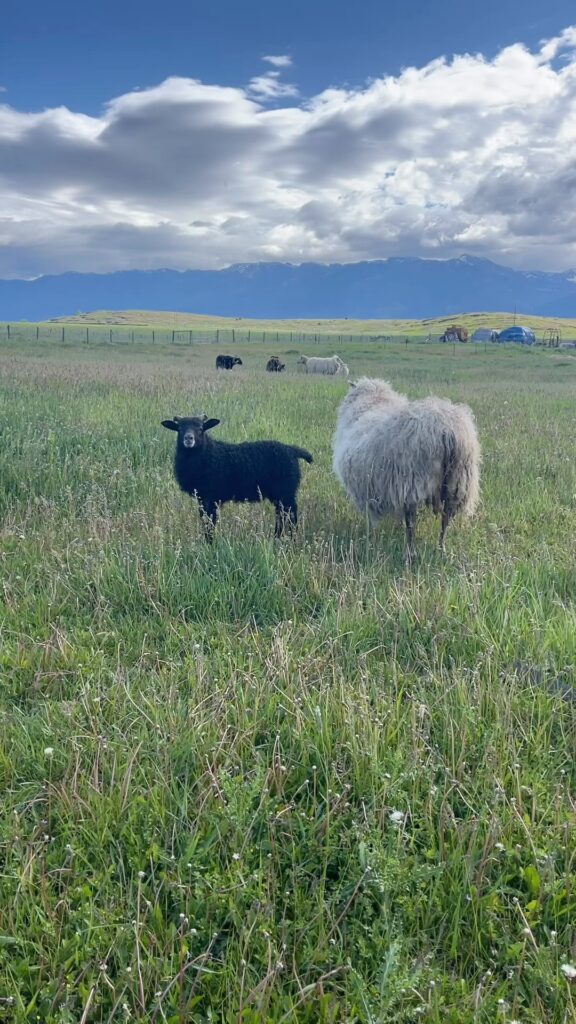
Learn What Your Land Can Provide
Perhaps the biggest lesson our farm has taught us is that feeding sheep through fall isn’t simply about deciding when to put hay in a feeder.
It begins with learning your land.
What does your pasture produce in April? What is still growing in July? Which areas hold moisture longer? Where does the forage mature first? How long can your ground realistically support your flock in the fall?
Those answers aren’t learned in one season.
We have spent years watching our heavy clay soil, moving sheep through different sections, winter-feeding in areas where we want to build organic matter, and noticing how those decisions affect the following growing season. We are still learning.
There is something deeply satisfying about that relationship between soil, forage, sheep, and shepherd. The pasture feeds the sheep. The sheep return fertility to the pasture. Our winter feeding helps build soil for future seasons. And year after year, we learn a little more about how to steward the ground beneath our feet.